
The Strategic Dashboard: Four Numbers That Define 2026
The defining signal of 2026 is not a single metric, it is the relationship between four. Indian IT sector revenue will reach $300 billion in FY26, yet net employment additions have collapsed to approximately 140,000, an 86% decline from the FY22 peak of 600,000. Meanwhile, Global Capability Centres now employ over 500,000+ professionals, quietly becoming the growth engine of India's knowledge economy. And globally, humanoid robot shipments have reached approximately 25,000 units, still nascent, but the trajectory suggests 1.3 million units by 2028.
(−86% from FY22)
(Global, 2025)
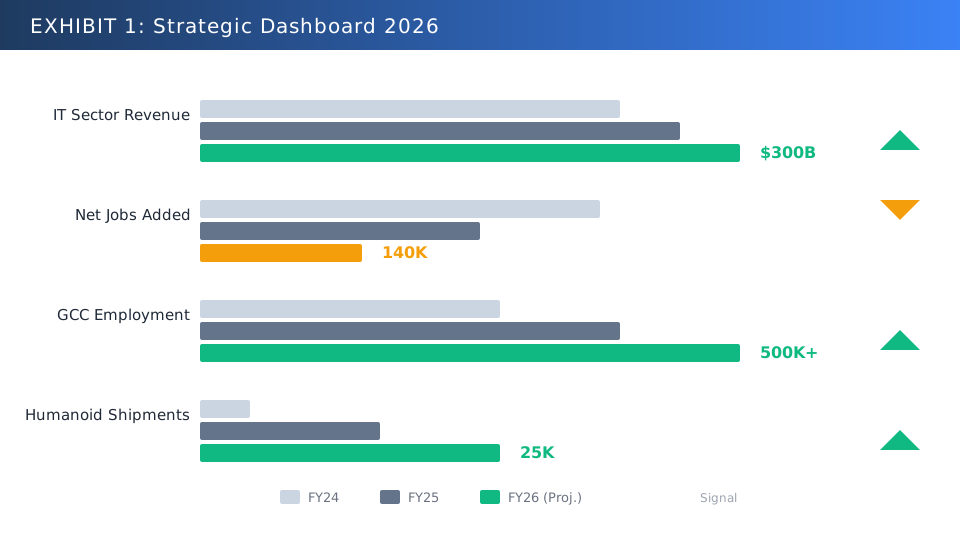
These four numbers tell a coherent story. Revenue continues to grow because AI-augmented delivery models are more efficient. Employment additions have collapsed because the same work requires fewer people. GCCs are thriving because they offer the organisational context that makes human-AI collaboration productive. And humanoid robots, while still in their infancy, represent the next phase of this transformation.
The Great Decoupling: Revenue Per Employee Divergence
The most consequential metric in Indian IT has always been revenue per employee (RPE). For two decades, this number hovered between $40,000 and $55,000, with gradual improvement driven by process maturity and pyramid optimisation. That era is ending. NVIDIA, the canonical AI-era company, generates $3.6 million per employee. Among Indian IT majors, Infosys now leads at $63,000, followed by TCS at $52,000, HCLTech at $48,000, and Wipro at $45,000.
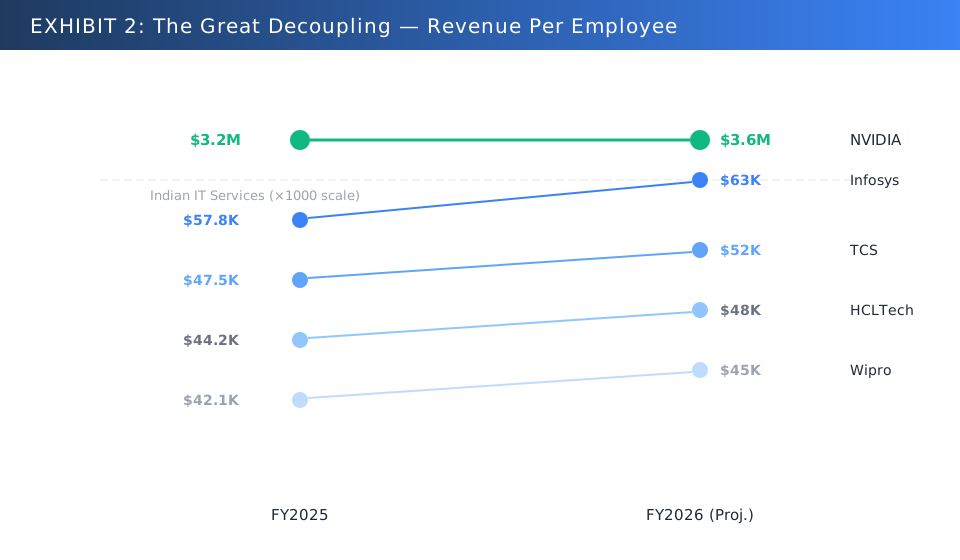
The strategic implication is stark: AI-native companies operate on fundamentally different economics. The 60x RPE gap between NVIDIA and Indian IT is not about different industries, it is about different operating models. Indian IT companies that close even a fraction of this gap will necessarily employ fewer people per dollar of revenue.
The Trust Cliff: Why Enterprise AI Adoption Stalls at Level 3
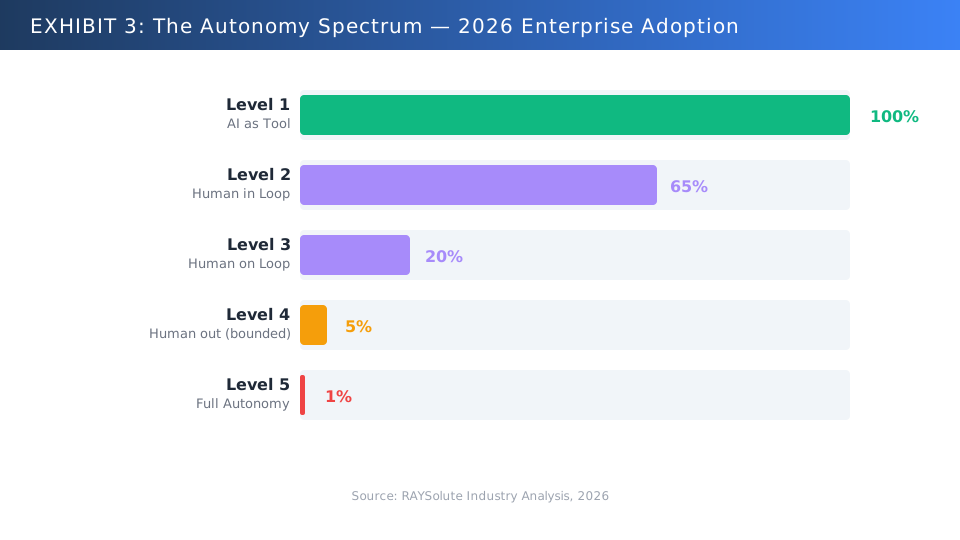
Enterprise adoption of agentic AI follows a predictable pattern. Level 1 (Copilot), AI assists human decisions, sees 85% adoption. Level 2 (Delegation), humans review AI outputs, reaches 65%. But Level 3 (Autonomy), AI acts independently with human oversight, drops to just 20%. This steep cliff marks the boundary between comfortable augmentation and genuine transformation.
The Fresher Hiring Crisis: 86% Decline from Peak
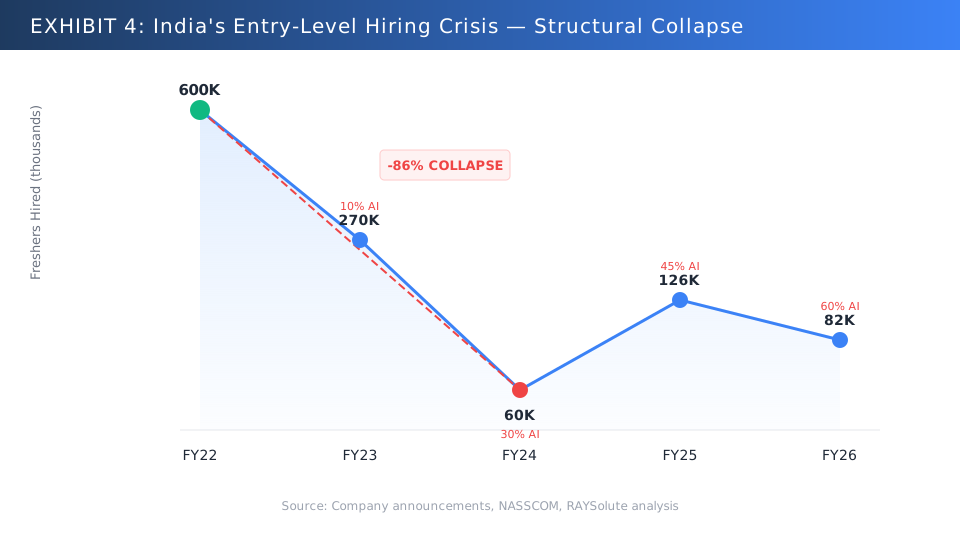
The most consequential labour market shift is not layoffs, it is the collapse of entry-level hiring. Indian IT hired approximately 600,000 freshers in FY22, the pandemic-driven digital acceleration peak. By FY26, that number has fallen to a projected 82,000, an 86% decline. This is not a cyclical downturn. It reflects a structural shift in how AI-augmented teams are composed.
Generational impact: The current cohort faces the most challenging entry into IT careers since the 2008 financial crisis. Unlike 2008, this is not a temporary demand shock, it is a permanent reconfiguration of the labour pyramid. Career strategies must adapt accordingly.
AI Platform Deployments: Infosys Leads with 5,000+ Projects
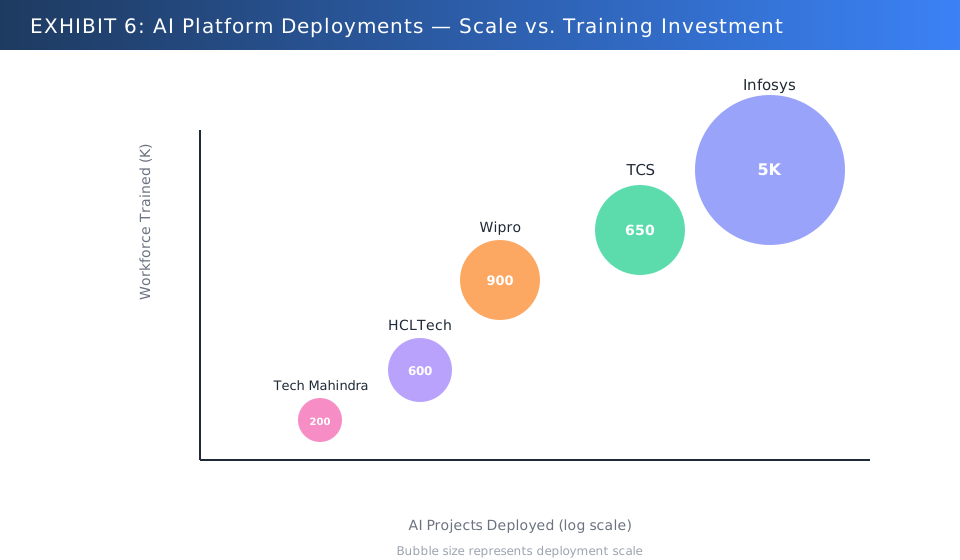
The race to deploy enterprise AI platforms has intensified. Infosys leads with 5,000+ Topaz projects, demonstrating the most balanced approach between deployment scale and workforce training. TCS follows with approximately 650+ TCS.ai projects, Wipro at 900+, HCLTech at 600, and Tech Mahindra at 200. The correlation between AI deployment scale and margin improvement is becoming evident in quarterly results.
Humanoid Robotics: The Next Transformation Vector
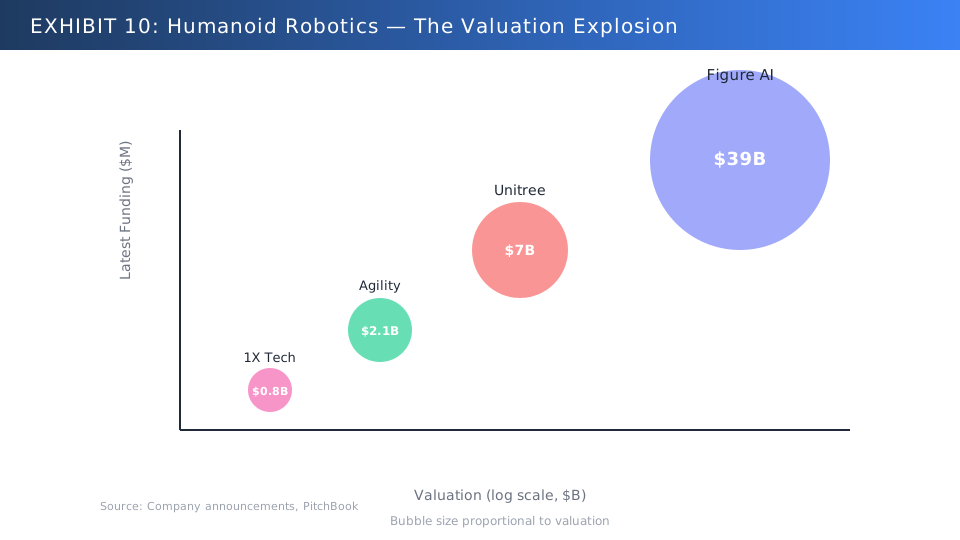
The humanoid robotics market has entered commercial viability. Global shipments reached approximately 13,300 units in 2025, with China commanding 78% market share. AgiBot and Unitree together account for 71% of global shipments. On the valuation front, Figure AI leads at $39 billion, followed by Unitree at $7 billion, Agility at $2.1 billion, and 1X Technologies at $0.8 billion.
India's industrial robot density remains at just 7 robots per 10,000 workers, versus South Korea at 1,012 and the global average of 162. This gap represents both a challenge and an opportunity: the industries that deploy robotics early will gain structural cost advantages.
The Solopreneur Era: Rise of the One-Person Enterprise
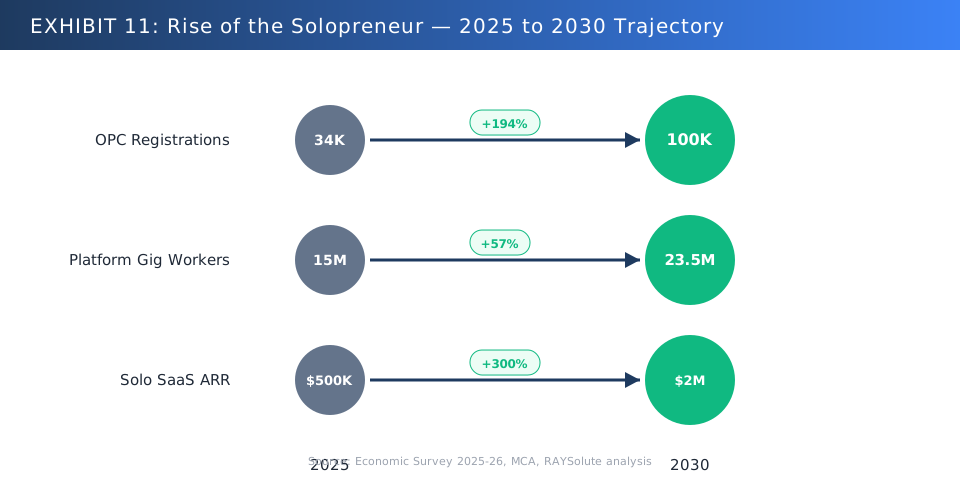
The Economic Survey 2025-26 documents 15 million platform gig workers in India. By 2030, projections suggest 23.5 million gig workers, 100,000 One-Person Companies (up from 34,000), and a $2 million average SaaS ARR for solo founders (up from $500,000). AI tools are collapsing the minimum viable team size for knowledge work.
Career Archetypes for 2026-2030: Four Paths Forward
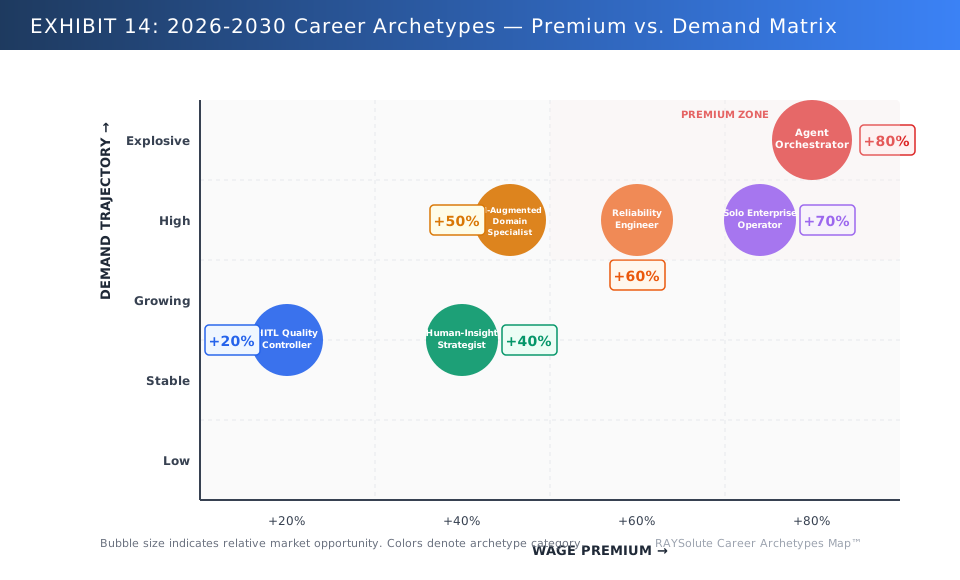
The workforce transformation creates four distinct career archetypes. Agent Orchestrators, professionals who design, deploy, and manage AI agent systems, command an 80% salary premium with explosive demand growth. Domain Translators, who bridge business needs and AI capabilities, see 40% premiums. Deep Specialists, in areas AI cannot easily replicate, maintain stable demand. And Traditional Specialists, in automatable domains, face 20% salary compression and declining demand.
The Winner's Playbook: Successful professionals in 2026-2030 will combine three elements: domain expertise that provides context AI lacks, orchestration skills that multiply AI capabilities, and continuous learning velocity that matches technology evolution. The specific domain matters less than the ability to compound these three assets.
Frequently Asked Questions
What is the Great Decoupling in Indian IT?
The Great Decoupling refers to the structural separation of revenue growth from employment in India's IT sector. In FY26, the industry generates $300 billion in revenue while adding only 140,000 net jobs, an 86% decline from FY22's peak of 600,000 additions. This shift is driven by AI-augmented delivery models that enable companies to grow revenue without proportional headcount increases.
How is Agentic AI affecting Indian IT employment in 2026?
Agentic AI is enabling IT companies to grow revenue without proportional headcount increases, fundamentally shifting the workforce model from labour-arbitrage to AI-augmented productivity. Enterprise adoption follows the Autonomy Spectrum: 85% of companies have adopted Level 1 (Copilot) AI, but only 20% have crossed the Trust Cliff to Level 3 (Autonomy), where AI acts independently with human oversight.
Which Indian IT company leads in revenue per employee?
As of FY26, Infosys leads Indian IT majors with $63,000 revenue per employee, followed by TCS at $52,000, HCLTech at $48,000, and Wipro at $45,000. For comparison, NVIDIA, the canonical AI-era company, generates $3.6 million per employee, highlighting the 60x gap between AI-native and traditional IT operating models.
What are the best career strategies for the Agentic AI era?
The report identifies four career archetypes for 2026-2030: Agent Orchestrators (80% salary premium, highest demand), Domain Translators (40% premium), Deep Specialists (stable demand), and Traditional Specialists (facing 20% salary compression). The winning strategy combines domain expertise, AI orchestration skills, and continuous learning velocity.
How many freshers did Indian IT hire in FY26?
Indian IT is projected to hire approximately 82,000 freshers in FY26, down 86% from the FY22 peak of 600,000. This is not a cyclical downturn but a permanent reconfiguration of the labour pyramid, as AI-augmented teams require fewer entry-level resources.
The Central Insight of This Report
Across 15 exhibits and 25,000 words of analysis, the evidence converges on a single insight: The agentic AI era rewards orchestration over execution. The professionals, companies, and institutions that learn to direct AI systems, rather than compete with them, will capture disproportionate value.
India's IT sector is not declining, it is transforming. The $300 billion revenue figure proves the industry's continued relevance. But the 140,000 net jobs figure reveals the new arithmetic. Success in this era requires new mental models, new skill architectures, and new institutional designs.
This report provides the fact-checked data foundation for navigating that transformation.

Download the Full Report
Access the complete Strategic Workforce Intelligence Report 2026 with all 15 exhibits, detailed methodology, and the Winner's Playbook for navigating the agentic AI era.
Download Full Report (PDF)